Beesotted contributor Jacob ‘The Gowler’ Gowler (@BeesBreakdown) gives us the tactical and statistical lowdown of Brentford’s win against Manchester United.
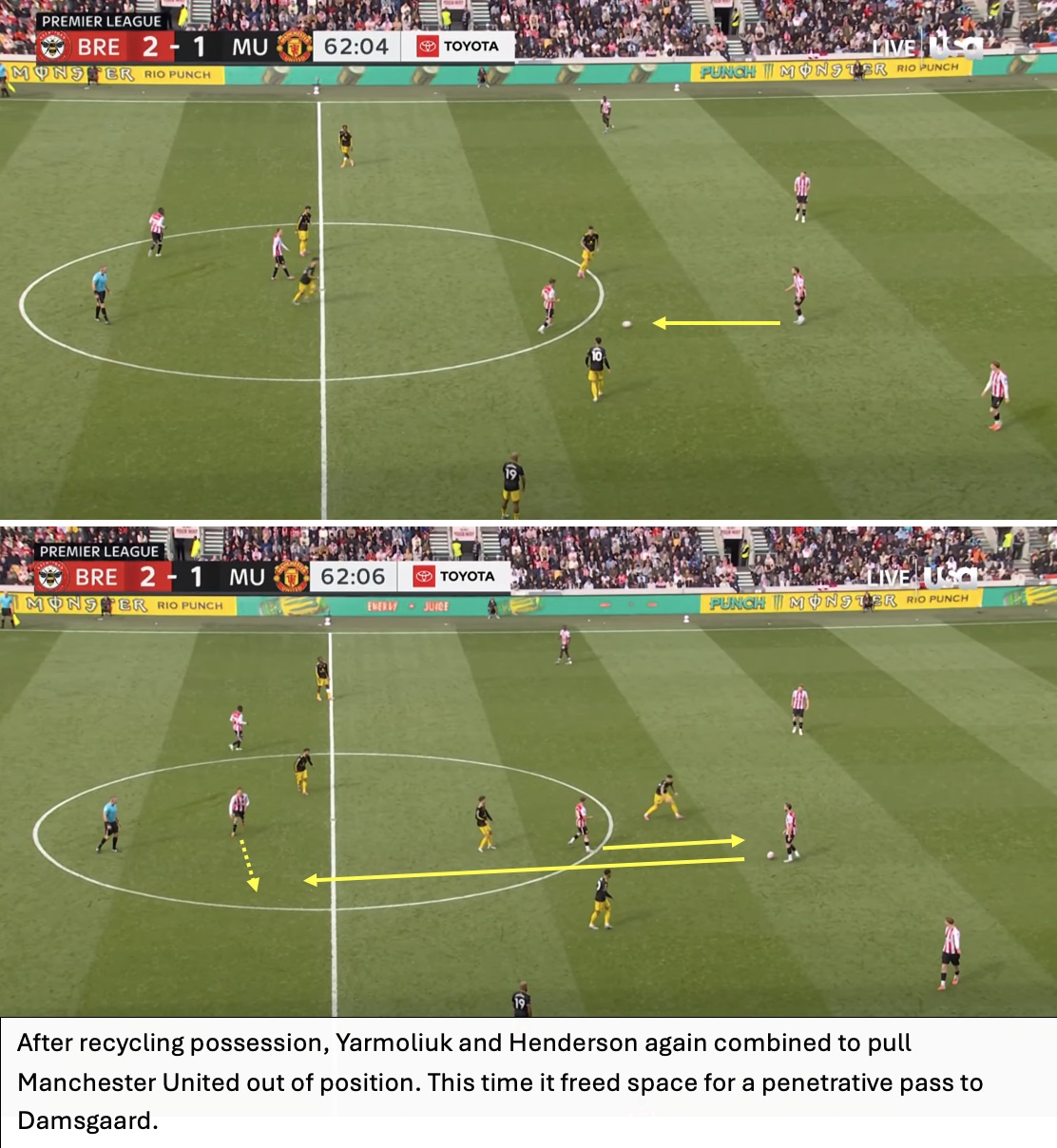
Keith Andrews made some adjustments to the starting XI, switching back to a 4-2-3-1, after using five in the back the past three matches. Hickey slid into the backline to join Collins, van den Berg, and Kayode. Henderson and Yarmoliuk formed a double pivot to provide defensive cover for creative outlet Damsgaard in the number 10 role. Schade and Outtara started out wide supporting Thiago.
Ruben Amorim stuck with his 3-4-3 with Shaw, Maguire, and de Ligt on the backline. Dorgu, Fernandes, Ugarte, and Dalot lined up across the middle. Mbeumo and Cunha looked to link up with Sesko leading the line.
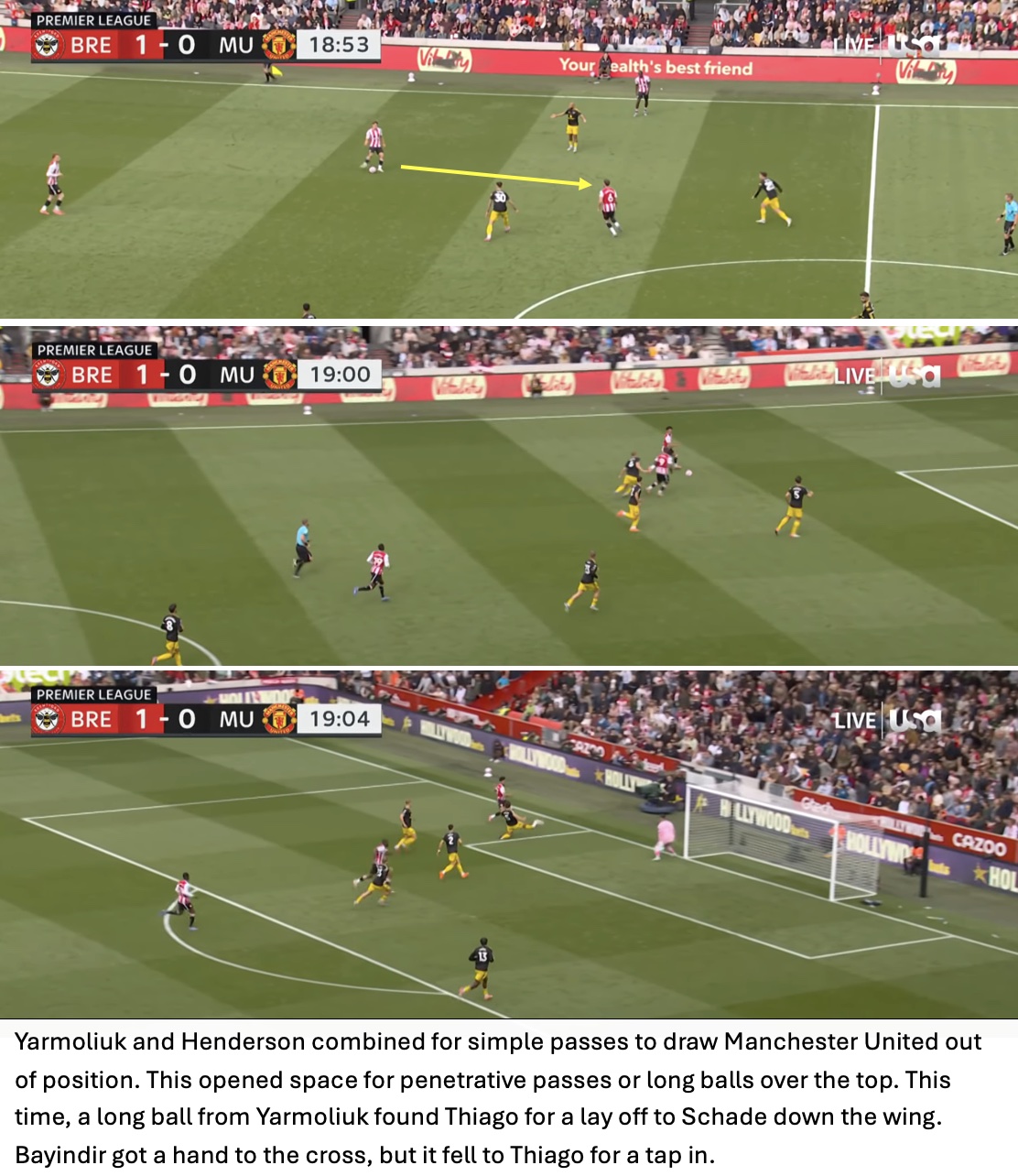
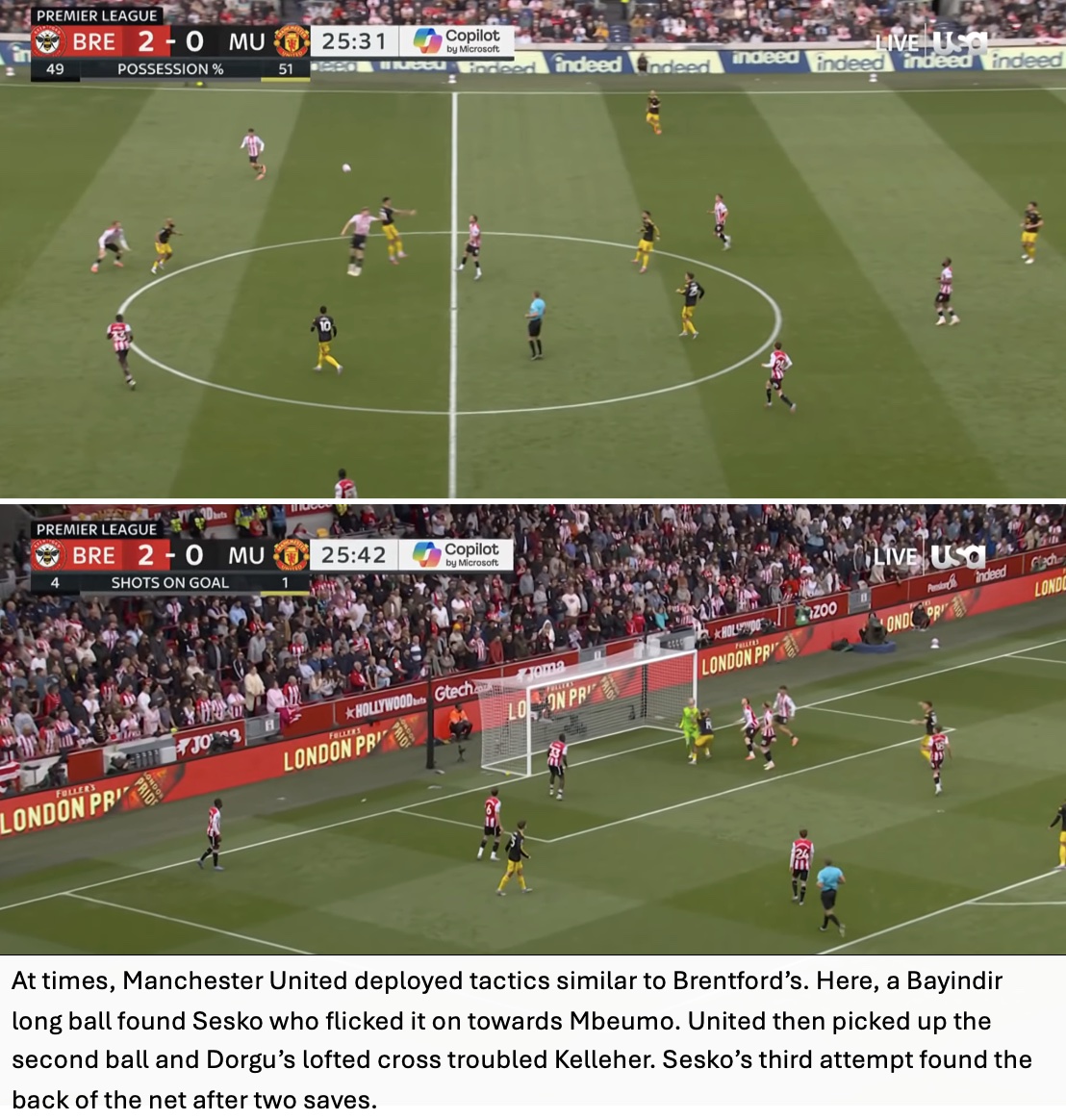
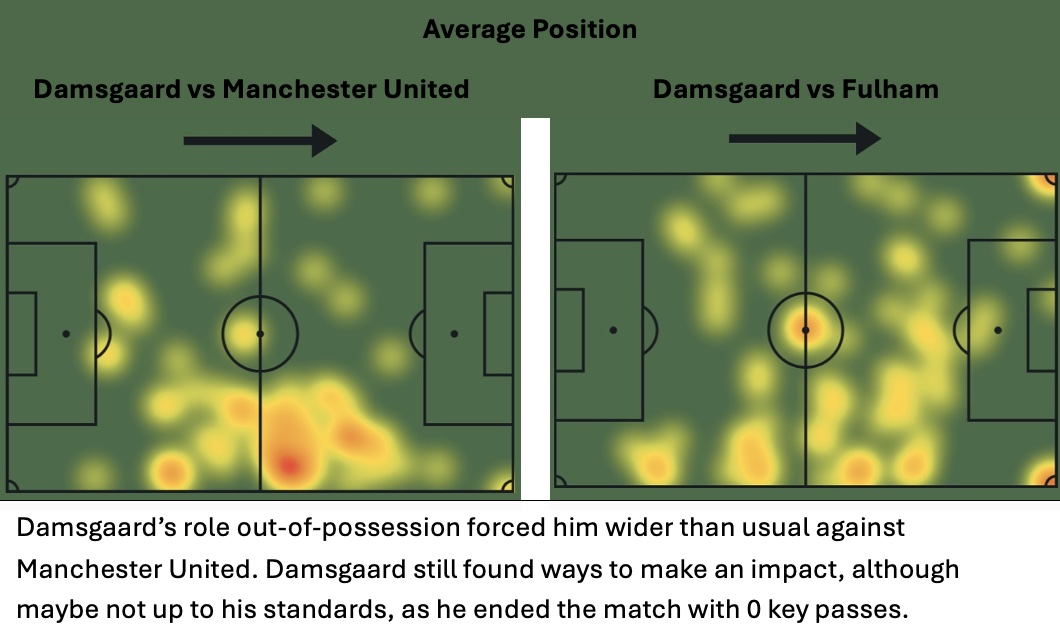
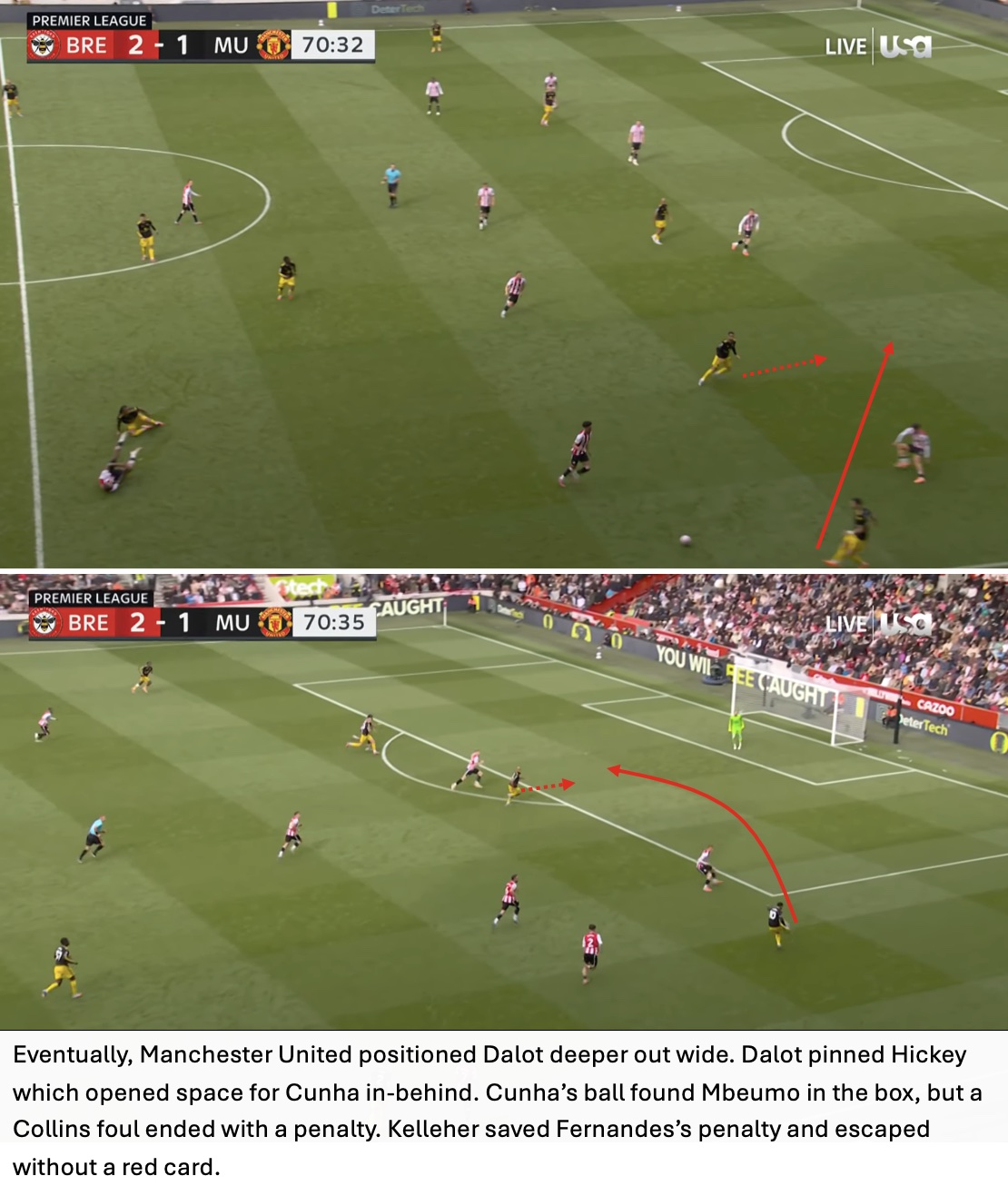
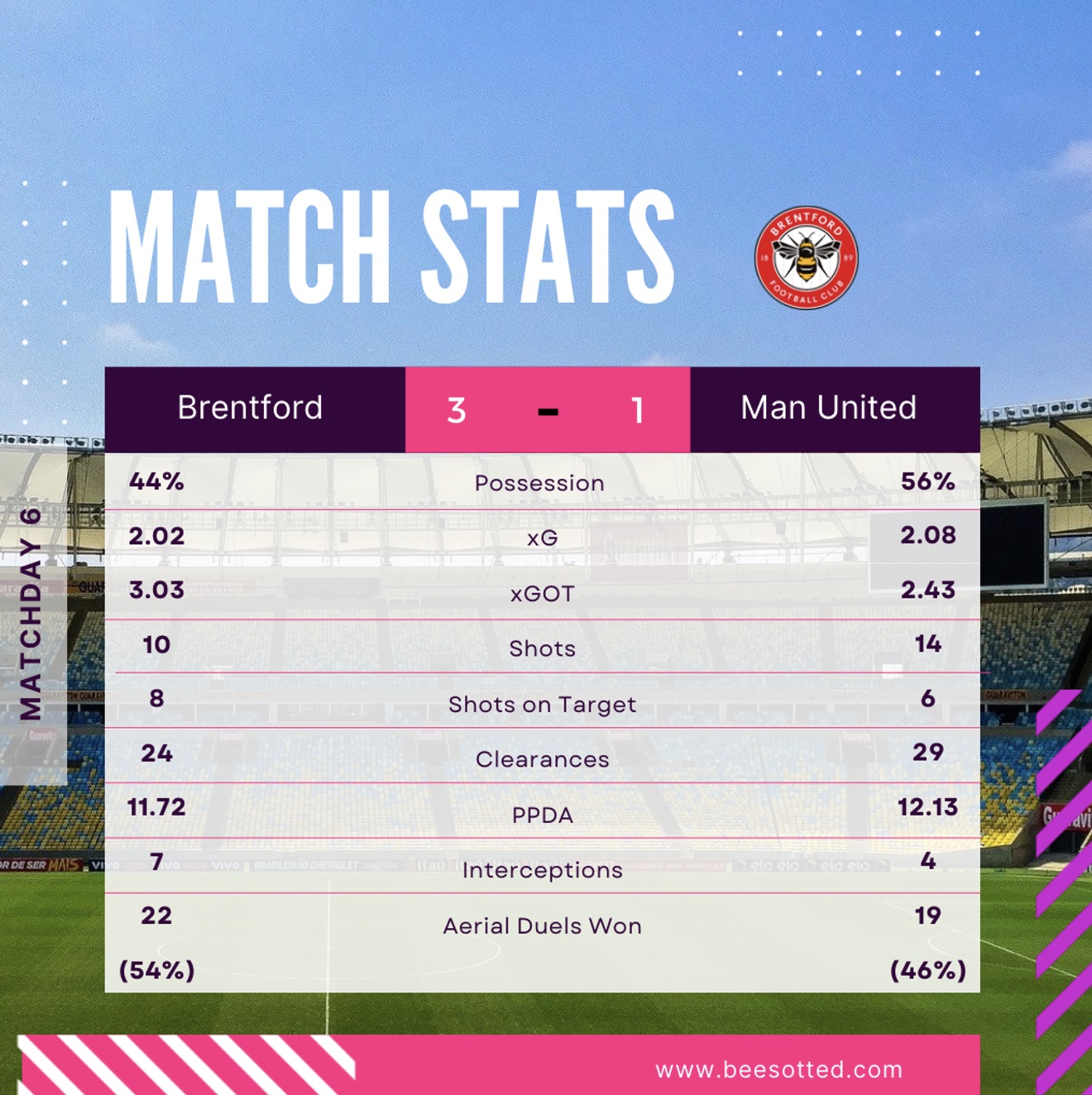
Brentford ended with 2.02 xG to Manchester United’s 2.08 xG, but 0.79 of United’s xG came off the penalty and exactly 1 xG came from Sesko’s three shots leading to his goal. Although Manchester United’s xG was heavily inflated, they still continue to underperform, having missed 2 of 3 penalties so far this season.
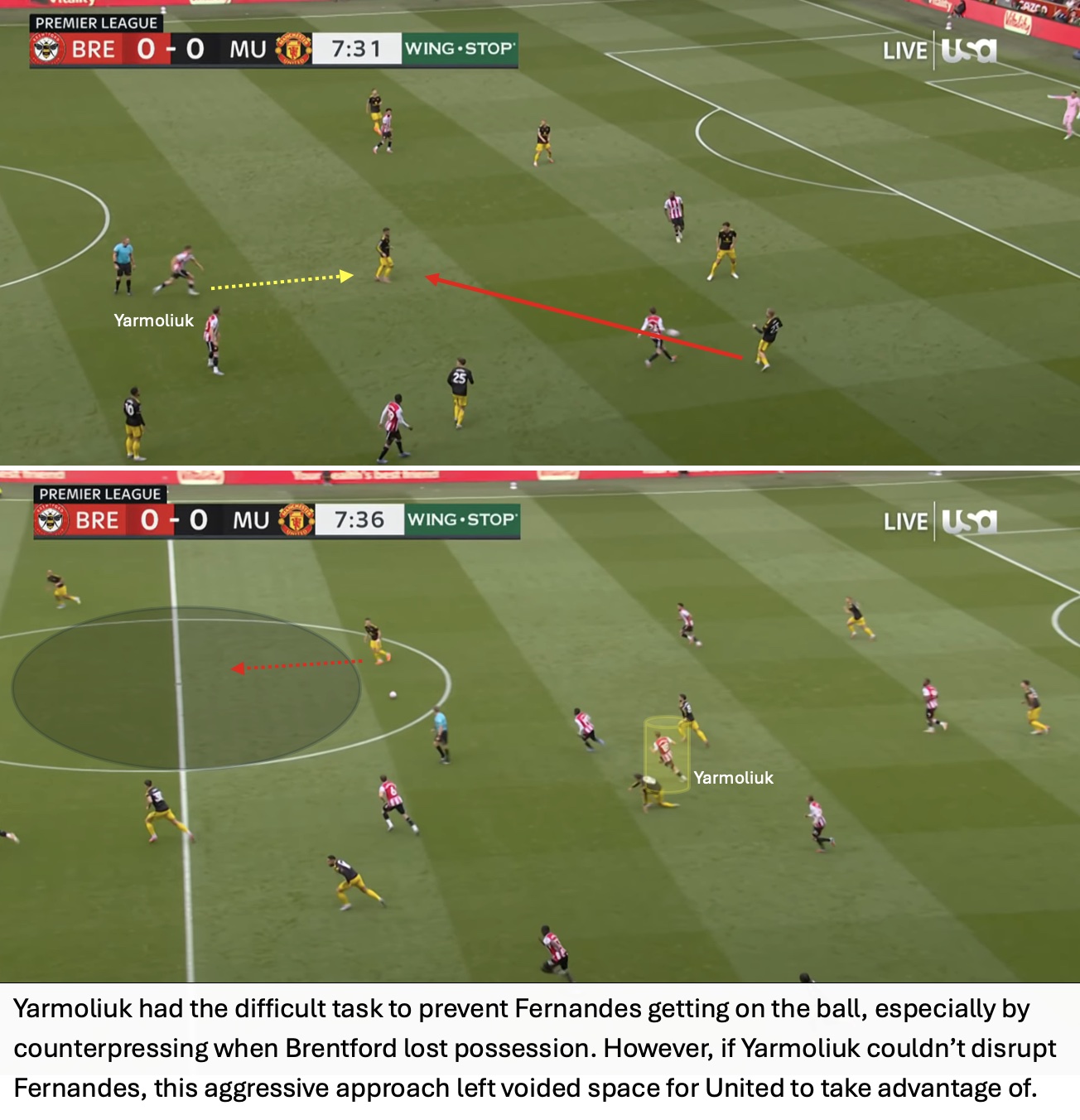
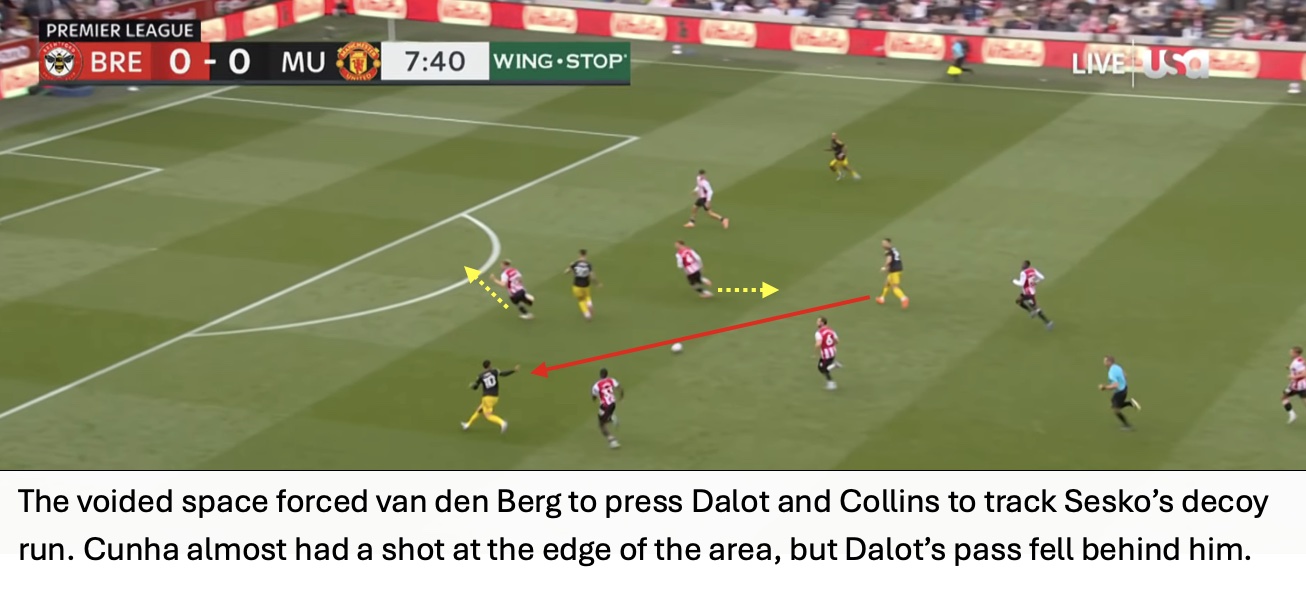
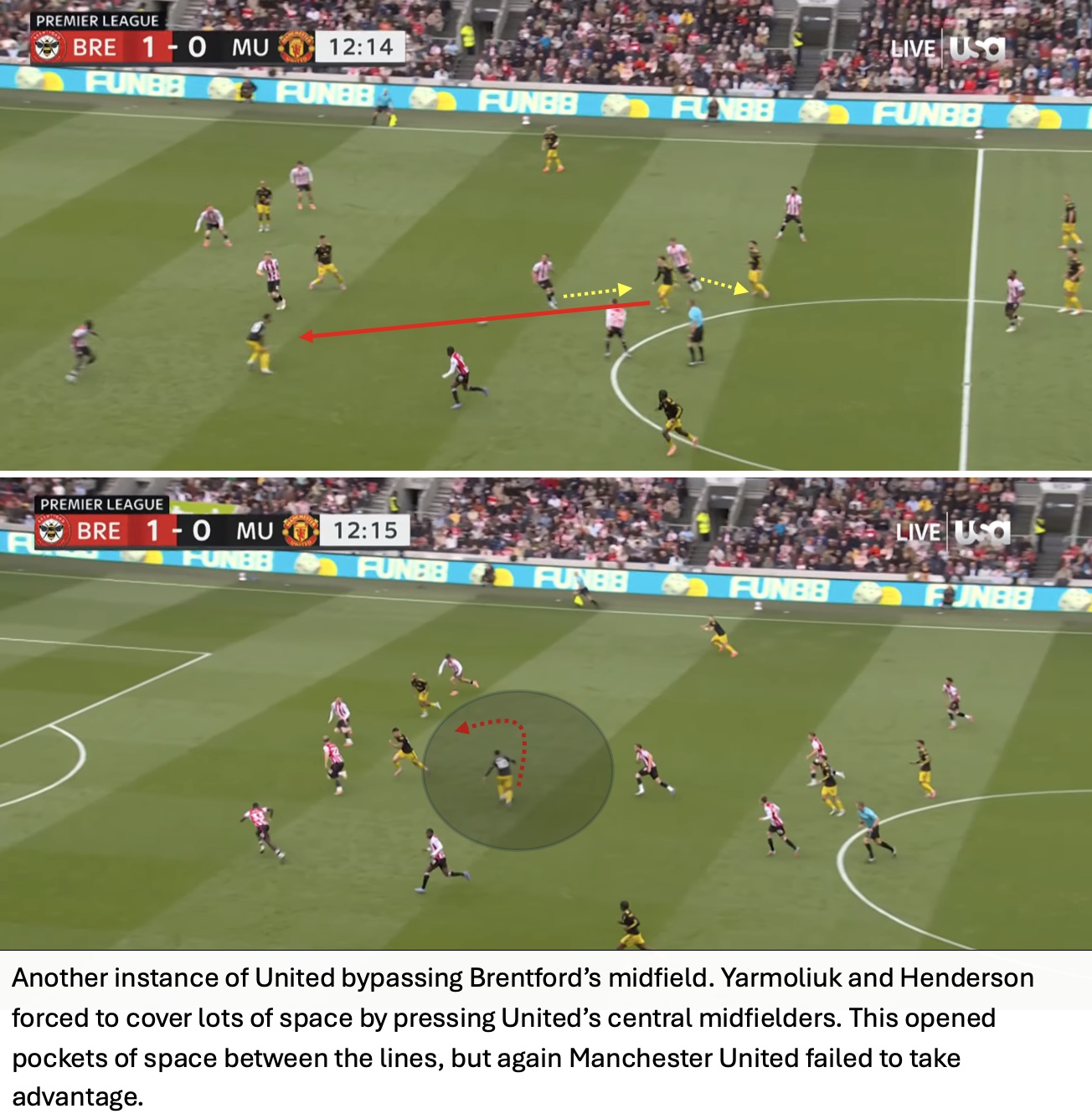
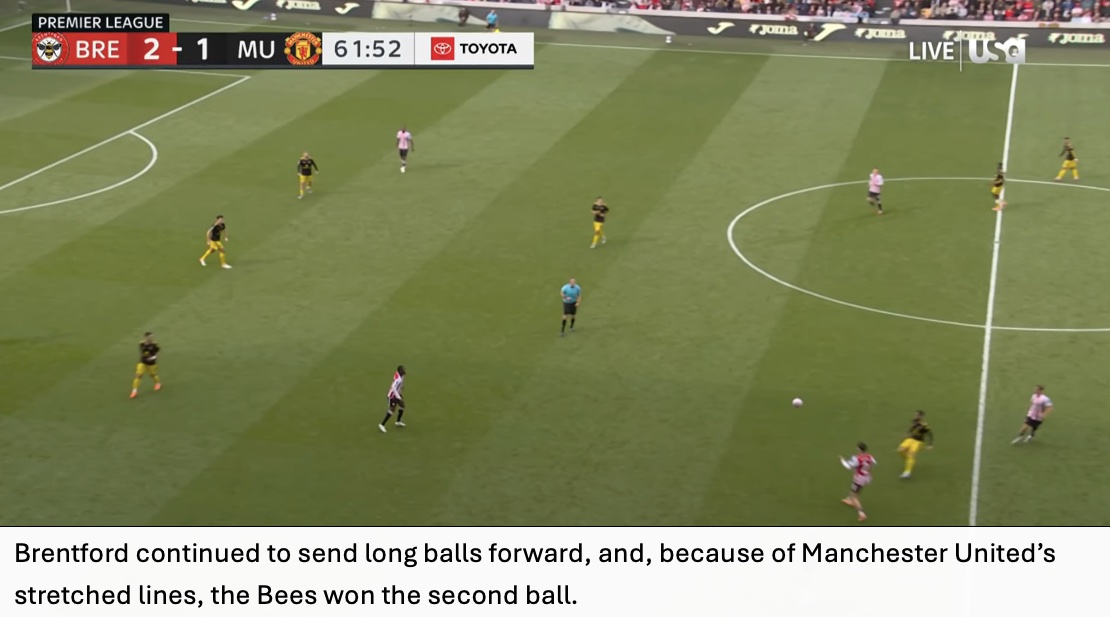
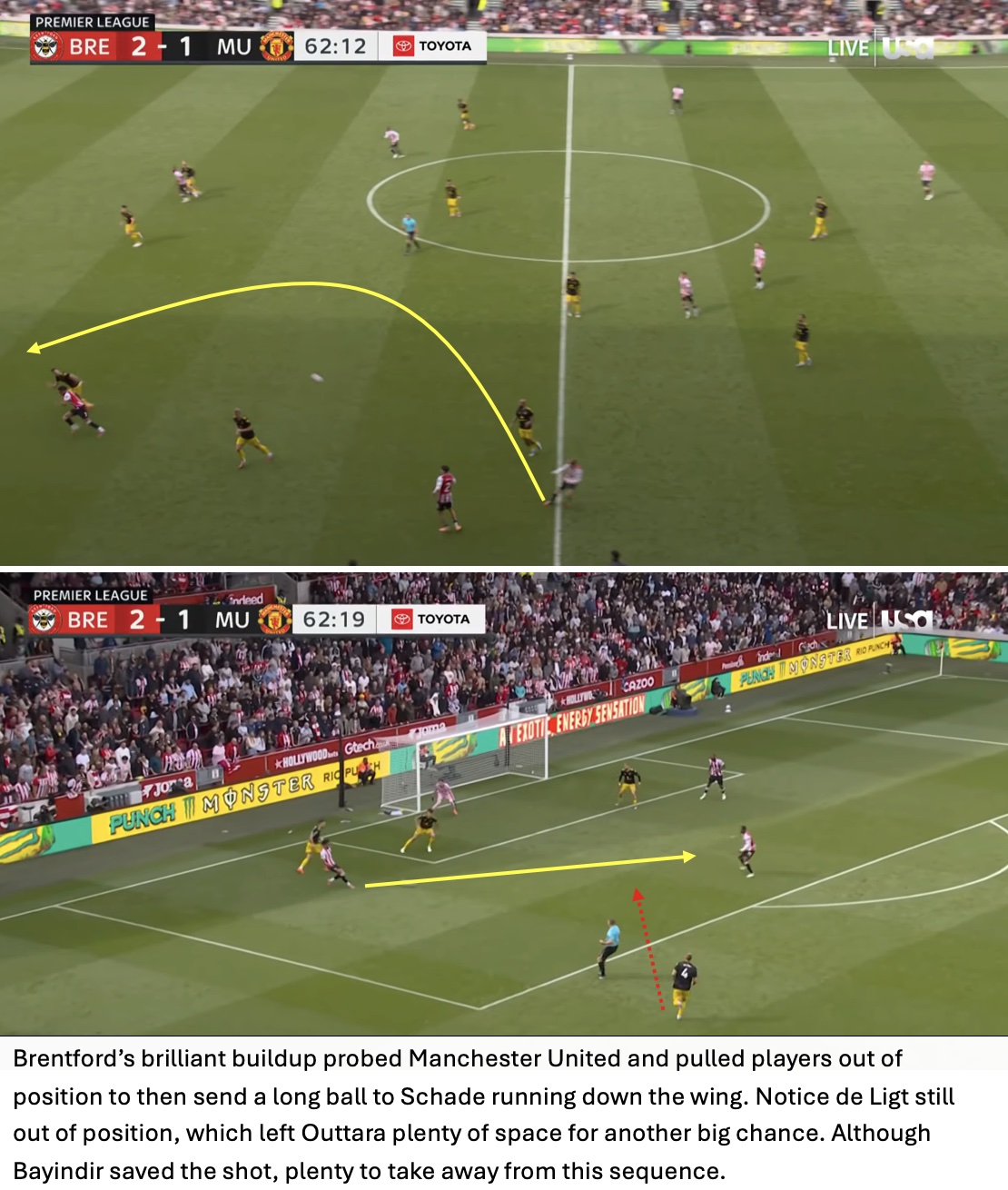
Manchester United seemed to play into Brentford’s strengths, relying on long balls and trying to win second balls. Still, United did find pockets of space between Brentford’s backline and midfield but couldn’t create much from it.
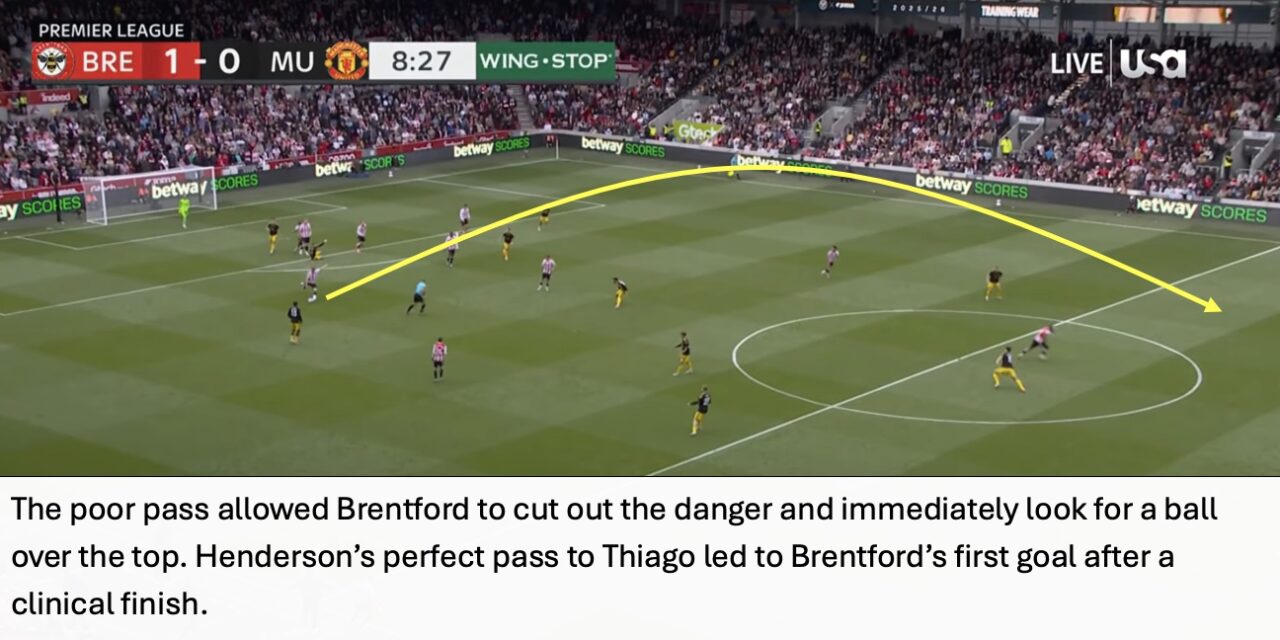
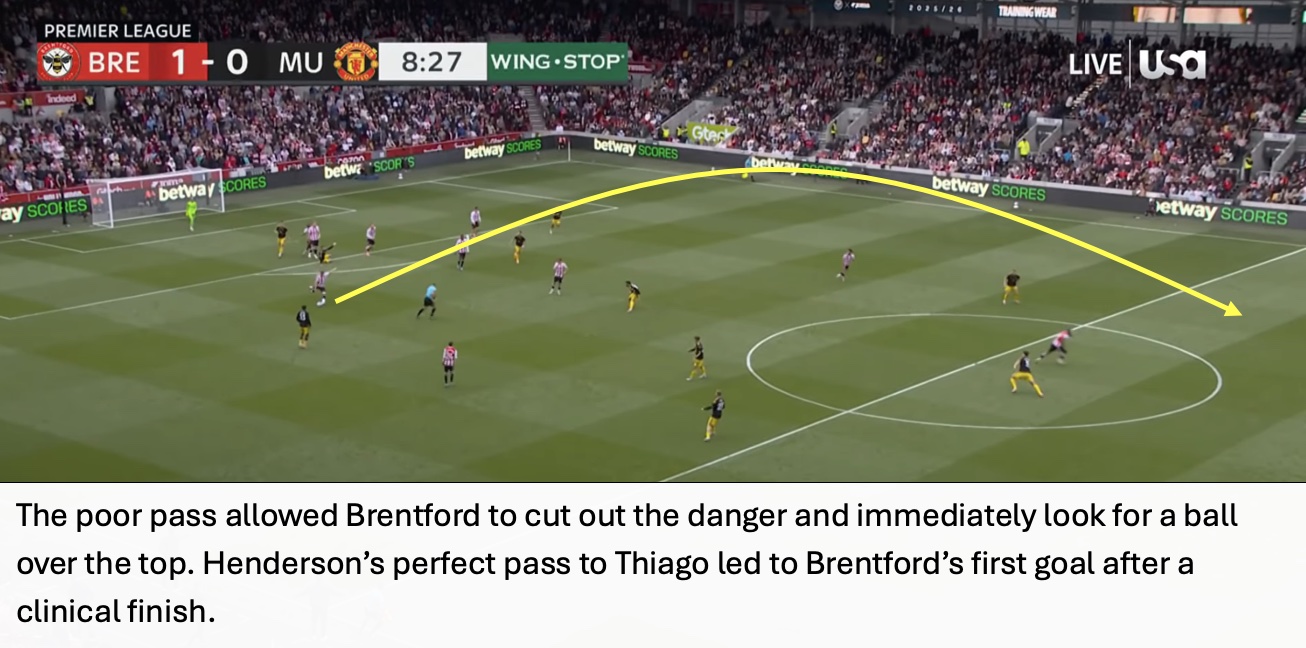
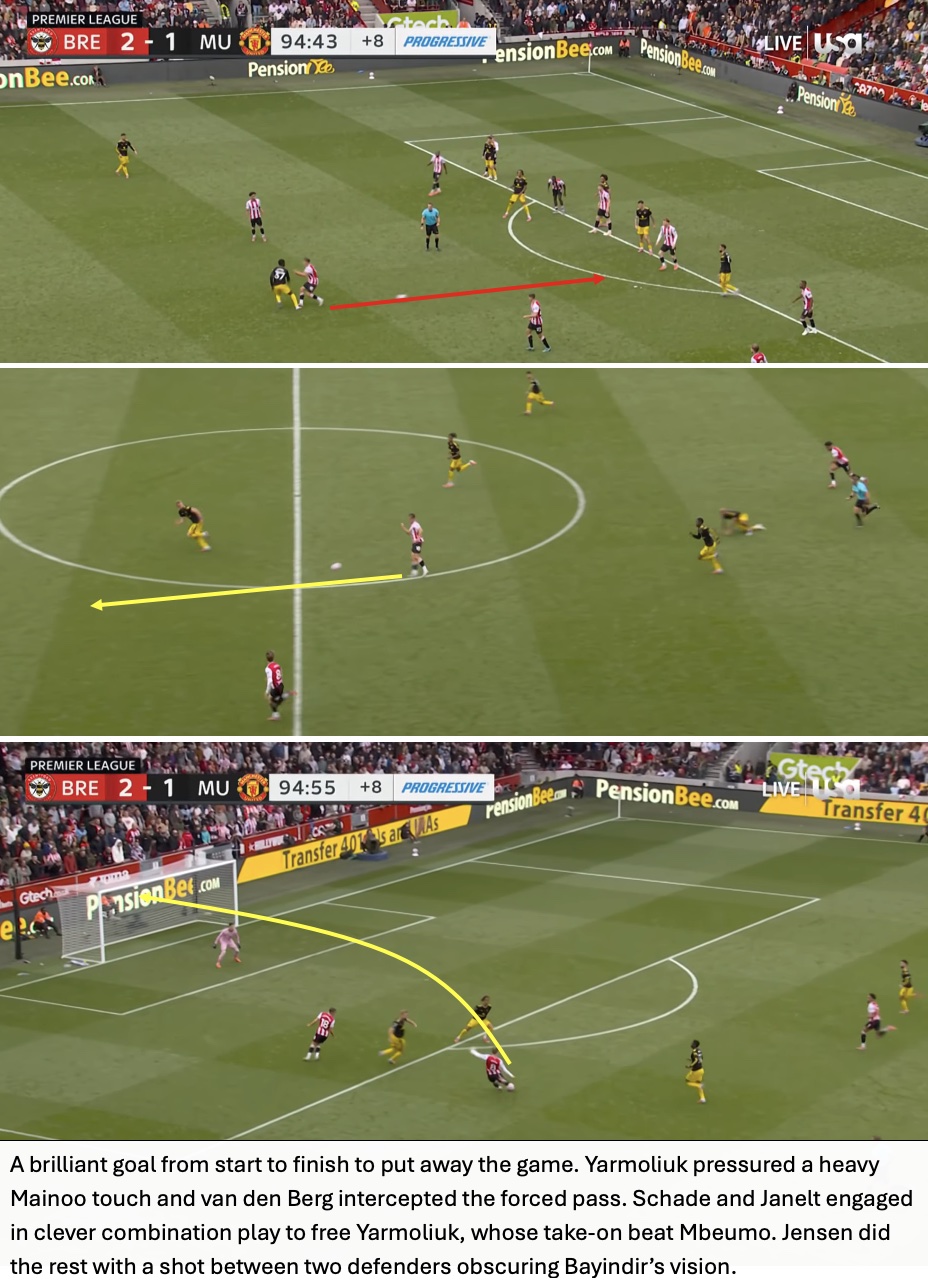
To make matters worse for Manchester United, Brentford countered to score their first goal off a mistake after United got in a dangerous area. United getting into those pockets of space stretched Manchester United’s lines and depth. The Bees looked to immediately push the ball forward in these instances.
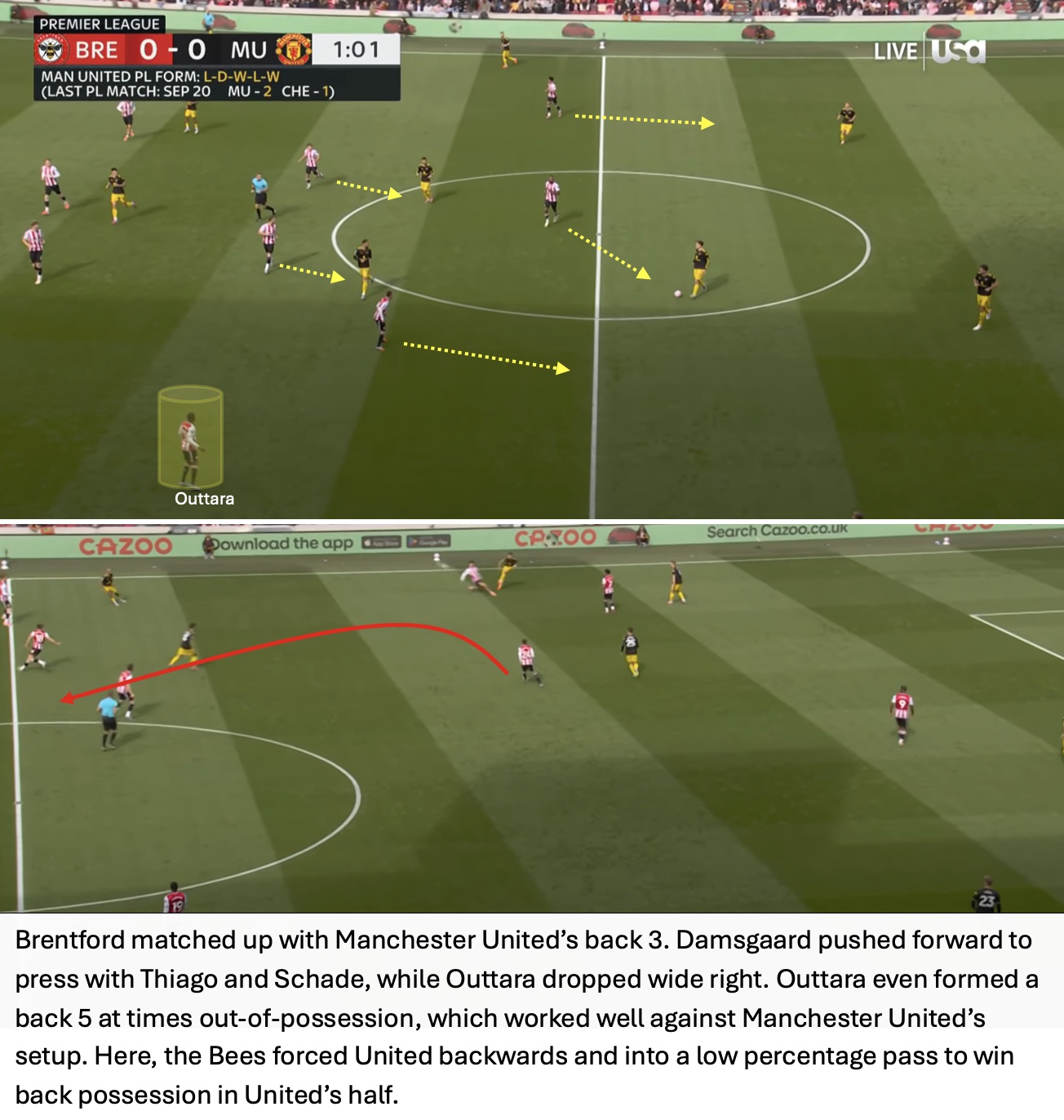
Brentford’s tactical flexibility allowed them to matchup out-of-possession. The Bees dropped to 5 at the back but still had the attacking options with Outtara as a makeshift wingback.
Typically, the Bees drop into a 4-4-2 out-of-possession, but the front 3, with Damsgaard joining up top, really worked well against United’s front 3.
Yarmoliuk and Henderson still pushed high up to press United’s two midfielders, but as mentioned previously, the back 5 allowed the Bees to have one centreback pressure any progressive passes.
This may still need tinkering in the future, especially if the Bees aren’t disrupting progressive passes, which can lead to dangerous transitional moments. For the time being Brentford can take solace in the fact that the pseudo back 5 found success against Manchester United.