
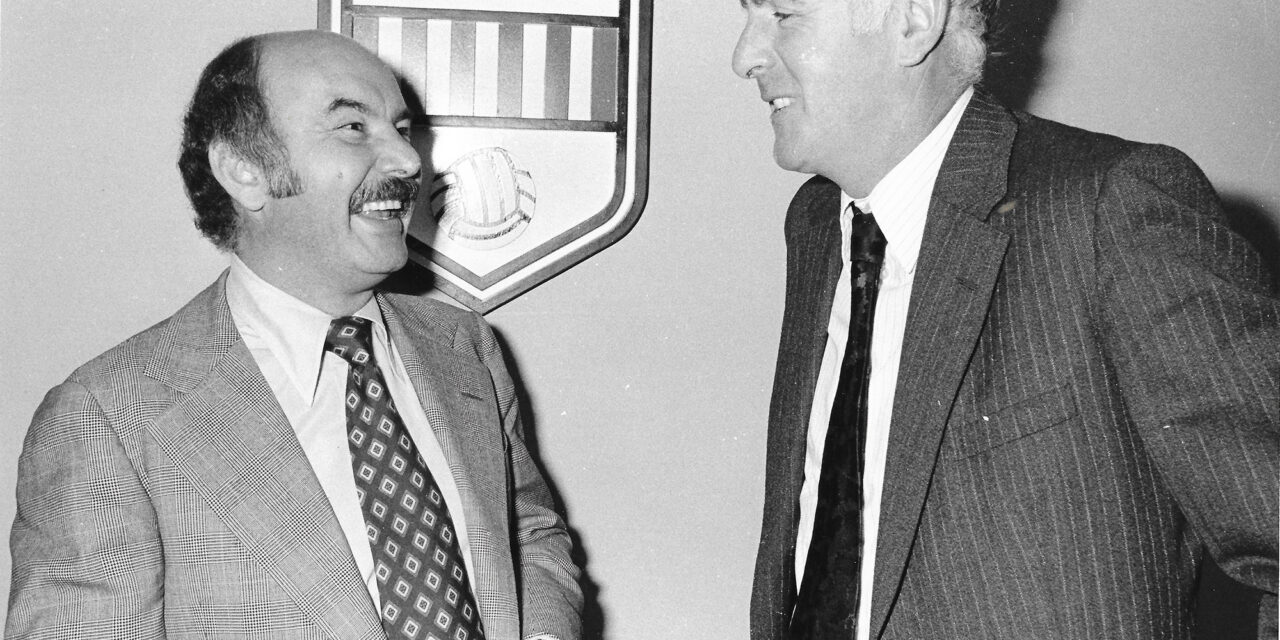
All Brentford fans of a certain vintage will have been saddened by the news that former Brentford Chairman, Dan Tana, has recently passed away and it was fitting there was a minute’s applause before the win over Aston Villa at the Gtech this weekend as a mark of respect. His was a remarkably eventful life, and his involvement with our football club was just one chapter in an encyclopedia-sized journey that took him from communist Belgrade to the hills of Hollywood — and seemingly everywhere in between.
I was honoured to sit down with Dan and his daughter in his favourite Chelsea restaurant, and later back at his home for a nightcap, to discuss his life and times with the Bees while I was putting together The Big Brentford Book of the Seventies (compiled with Mark Croxford and Greville Waterman). Dan had such a friendly, open, and generous nature, and I know he enjoyed reminiscing — he even gifted me his Brentford castle-badge cufflinks and told me to keep in touch. Thank you once again, Dan.
Here’s the full interview, written up in the first person, recounting my evening with Dan Tana and the story of his time at Griffin Park.
I’d been involved with football all of my life. I signed as a young player with Red Star Belgrade before I defected from Yugoslavia and, during the 1960s, I’d owned a football club in Los Angeles, the LA Toros, along with two partners, Dan Reeves and Dan Martin – the three Dans! While I was running the Toros, we recruited Brentford’s Ron Crisp, who was a good player and, surrounded by Brazilians, Mexicans, plus stars from a host of other nations who couldn’t speak English, he was the automatic choice to become our captain.
When my daughters were eight and ten, my wife and I decided to come to England so that the girls could get a better education than they were getting in the States, and we looked at some nice schools. I also had some good friends in England that I’d made in the film industry and I have to admit that, combined with the nation’s love of football, a game that has always been my first love, it meant I felt at home in this country almost straight away – despite the fact that the 70s were tough years in England. The country was almost bankrupt and we had three days of electricity, followed by three days of blackouts, not to mention the miners’ strike.
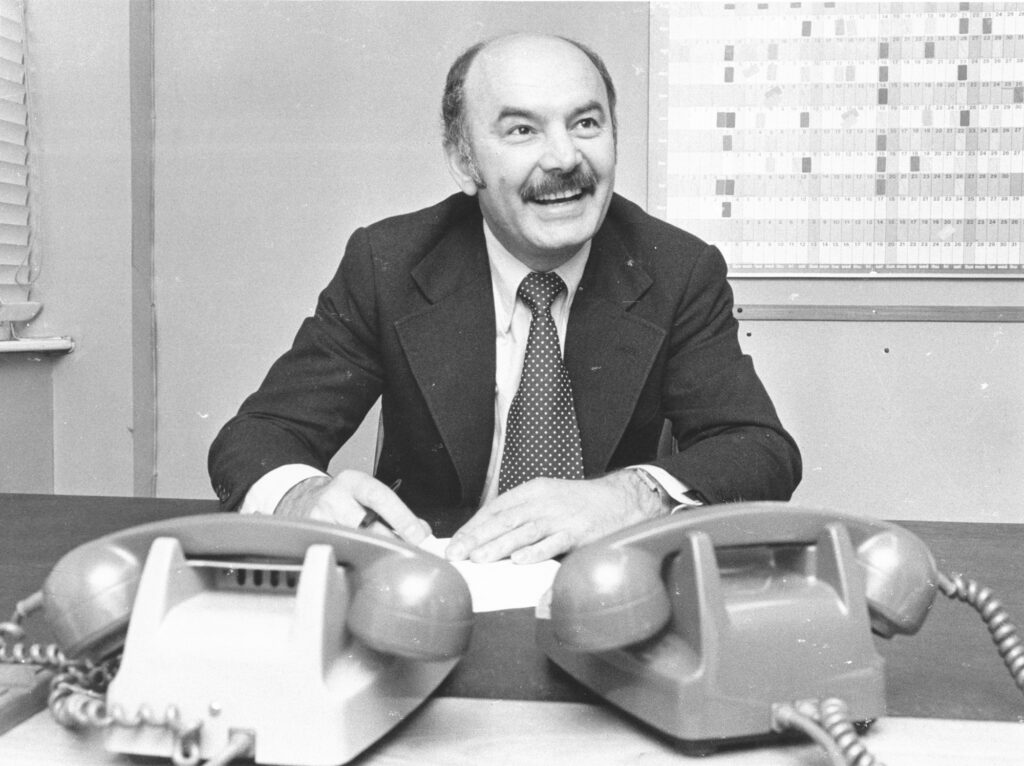
In London, I became very good friends with Brian Mears, who was chairman of Chelsea, and I was invited along to a few games at Stamford Bridge, where I was also introduced to the Arsenal chairman, Denis Hill-Wood, so I visited Highbury on several occasions too. Then, because of my love for the game, and the fact that I’d been a player myself, I was also invited to join a football team called the Goal Diggers, who played to raise money for charity over at Hyde Park on Sundays. The team included the likes of Jimmy Hill, Ron Greenwood and Bobby Moore, amongst others, and we’d always follow the match with a few beers in one of the pubs along the Fulham Road.
I remember one day I was chatting to the former Chelsea player, Frank Blunstone, who I discovered was the manager at Brentford – he asked me why I’d been to Chelsea and Arsenal, but had never been down to Griffin Park. I was honest and said I didn’t know where Brentford was, so when I found out how close it was, I agreed to come down and watch the Bees.
I’ll be the first to admit that the match itself wasn’t great – Brentford lost two or three-nil – but the combination of the red and white stripes, which were similar to the ones that I played in at Red Star, and the atmosphere generated by the fans who were singing: “We love you Brentford” and “Come on you Bees”, made a real impression on me. It was love at first sight.
I was made to feel very welcome at Brentford, but it was clear that the club were in a spot of trouble. Even so, it was a bit of a surprise when, after just a handful of games, I was invited to the club AGM and asked if I wanted to join the board. I was flattered but made it clear that I had no desire to become involved at that level and, either way, I wasn’t even a shareholder, so I wouldn’t be permitted to attend in any case. Somehow I was persuaded to buy five shares at 50 pence each and I went along, but at that stage, only a handful of people knew anything about me.
It soon became clear that there was a situation between the two families who were in control of the club – the Daveys and the Wheatleys – then towards the end of the meeting it was proposed that I join the board and a seconder was called for to support the idea. But I could see there were a lot of problems that would need to be solved and I told them that I would only consider it if I was unanimously voted in among the shareholders – I didn’t want to cause any further splits or make matters worse. The shareholders all backed me and, before I knew it, I was on the board! At the same time I was elected, former Supporters’ Club chairman, Peter Pond-Jones, joined too, which I thought was a very positive step.
At my first board meeting I realised there was another problem – an agreement between the two families to rotate the running of the club between themselves on a year-by-year basis. One year the Davey father and son team would be chairman and vice-chairman respectively, then it would be the Wheatleys’ turn. So I explained that, in my mind at least, there was no way we could run the club like that going forward – but there seemed no immediate end to that situation. Then, after six months or so, in a bid to solve that continuity situation, it was proposed by the Wheatleys that I become chairman and, after some negotiating, both families agreed that I should take over the hot seat for a period of four years. I therefore became the first foreign-born chairman of an English football club – things have certainly changed in this country since then!
My demands were that the board would be run by my rules, with a meeting at least once a month, and I insisted that no meeting could ever end without everyone on the board agreeing on the outcomes. I said that we’d have to continue discussing outstanding issues until everyone was convinced about making a decision. Although not all of my ideas were well received by Denis Piggott, who was a very stubborn and military man, he loved the club, there was no question about that. I used to attempt to replicate some of the successful ideas we’d tried in America, such as a Ladies’ Day where women and children could come in for free. I visited all of the local factories in Brentford and went all around the neighbourhood with the players – we also held regular lunches with the press, which was very contrary to the archaic situation previously.
Another idea I introduced was that at least one of the directors had to have seen a potential new player before the manager bought him. We had some great scouts, but I thought it was important for the board to be fully aware of who we were buying. But the director wasn’t allowed to sit in the directors’ box – he had to buy a ticket and stand on the terraces with the fans and ask their views on the player. I thought the system worked very well too. I also suggested that if any of our supporters, who lived all over the country and many of whom were very knowledgeable about the game, recommended a player we weren’t aware of, and we subsequently signed them, the fan would be given a sum of money as a reward.
The next thing I insisted on was changing the team manager. I knew it was time to start rebuilding the club and I thought Mike Everitt was not the right person to be in charge, despite being a nice guy. So we started interviewing potential new managers and, after half a dozen or so, I’d decided that I wanted Roy Hodgson to come to Brentford and told the rest of the board. They didn’t agree. I was told that the new manager should be a Brentford person, a former player, and Peter Pond-Jones nominated John Docherty, so I backed him.
John did a very good job at Brentford, I thought, and brought in some very exciting players but, to this day, I have no idea what happened between him and me to make him want to walk out of the club. One day the manager came into the board meeting – which was another new development I’d insisted on – and said that he was angered at the board turning down a transfer for a new player, naming me as the person he thought had blocked the move, and he left the club over the matter. But as I say, even to this day, I really don’t fully understand why Docherty resigned from Brentford.
But John’s departure paved the way for Bill Dodgin to come to Brentford – Bill was a great manager for the club and we played some wonderful football with him in charge. We also introduced some new people onto the board, including the playwright Willis Hall and the rock star Rick Wakeman, who was a big Brentford fan. It felt like it was becoming a real family club and we increased the crowd quite significantly with Bill’s attractive, winning football. Great men like Eric Radley-Smith were involved too – he was so proud when he eventually became the chairman of the club he loved.
Because of my relative inexperience of English football at that time, I always kept a close eye on the development of managers at other clubs, just in case I needed to change the manager at Brentford, and I kept a list containing the names of two or three men. Anyway, one night I received a very late phone call at home from Glenn Frey and Don Henley, members of the band The Eagles, who were friends from Hollywood and had come to Griffin Park to watch a match as my guests while they were on their first tour of England. They’d called to invite me to a party at Elton John’s house and told me that they’d been talking about me to Elton, who it emerged was about to take over at Watford, and said that I should come over and join them at the party. I told them that I’d been fast asleep and that they’d woken me up in the middle of the night, but they kept saying that Elton wanted to meet me to talk about football… “Come on Dan!” they kept urging me, so I asked my wife and she said I should get up and go.
So I was introduced to Elton and he told me all about his plans at Watford, of how he was about to appoint Bobby Moore as his new manager, and what did I think? Well, it was difficult for me – I had a great deal of respect for Bobby, he was an incredible player, but he had no experience of management, so I told Elton that if I were him, I’d be looking for somebody with a bit more experience. I then told him about the list that I kept if things didn’t work out with Bill Dodgin and said that if I had to bring a new manager in straight away, the first person I’d ask would be Graham Taylor at Lincoln City. And, lo and behold, the very next day Watford had a new manager – one that took them from the Fourth Division to the First. I felt sorry for Bobby Moore – he was a friend of mine, God bless him. But the key to success at any football club is having the right man in charge – a good manager is essential.
The time around Bill Dodgin’s departure was very difficult, with only a handful of games to go. It looked as if Brentford would get relegated and something had to be done to avoid the drop back to Division Four. The supporters had been demonstrating in the forecourt at Griffin Park prior to his departure and I’d spoken up on behalf of the manager – telling people that he’d been good enough to get us up and I thought he was good enough to keep us up too. Bill and I spoke about the situation and, until the 6–1 defeat at Colchester, followed by the home defeat to Rotherham, he’d told me not to worry as he had every faith in being able to turn the situation around.
But after the Rotherham game, Bill came over to my house and we analysed the whole situation and, on further reflection, Bill was no longer convinced that the team would escape the drop. So we came to a mutual agreement that he should step aside. I didn’t sack him – Bill was a very good man. Fred Callaghan then came in and we just about escaped relegation in the final game of the season. Fred was a very good assistant manager – in fact, I begged him to stay on to help Bill before he left to take over at Woking.
As well as my commitment to Brentford, I’d been invited onto the FA board to replace the Arsenal chairman, Brian Mears, in representing clubs of all sizes in and around London (FA Division VII) – from the likes of Arsenal and Tottenham, to minnows like Ford United and Gorleston. I spent five of the best years I’ve been involved in football combining the two roles before Chelsea’s Ken Bates replaced me in 1983. The integrity and honesty at the FA was, and still is, second to none – but those are the two qualities which, in my opinion, meant they were always unlikely to win the World Cup bid. I had a fantastic relationship with both Ted Croker and Sir Bert Millichip – men I still have a huge amount of respect for.
I knew that if English clubs could combine the energy and pace of the game here, with the technical skill of the continental game, the FA could oversee a situation where they possessed the strongest League in the world – which is now the case with the Premier League. Jimmy Hill and I were also the two instigators of the eventual implementation of the three-points-for-a-win system into the English game. It may have taken us four years to get our way, but look how representation from Third Division Brentford and Second Division Fulham helped revolutionise the game.
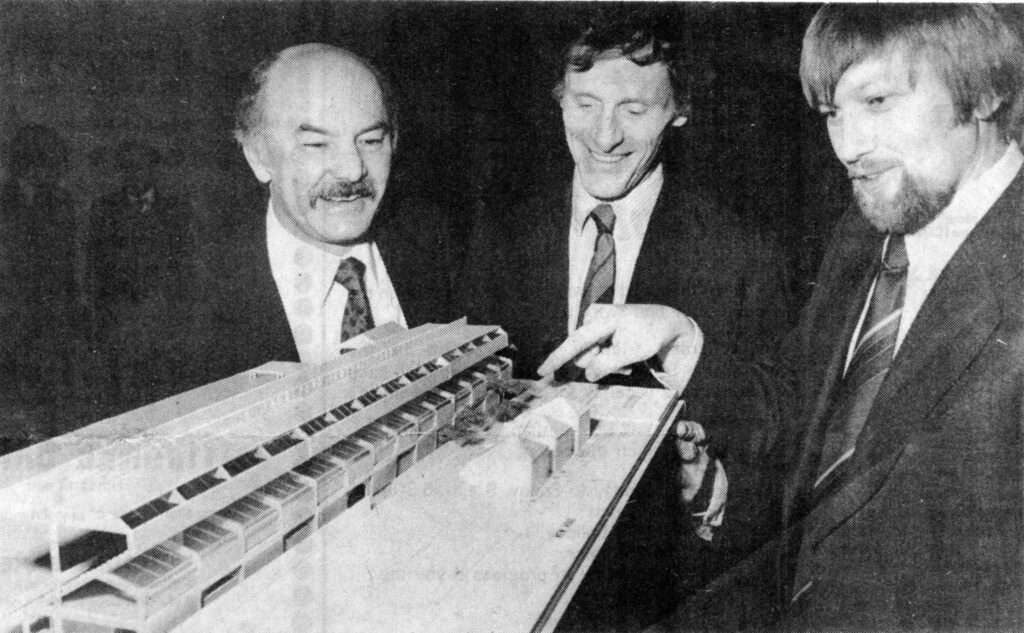
I was also looking to import overseas talent to Brentford, so that the club could perhaps regain its place in the top flight. But I realised that the problem at Brentford was the stadium needed developing – I explained to the board that we should be a Second Division club at the very least, but beyond that, we’d need the stadium to be ready. My vision was to improve and enlarge Griffin Park, certainly not to sell off parts of the ground and remove the ability to grow completely. So, when they came on the market, the club started buying the houses around Griffin Park to help give us scope in the future. There was also a lot of talk about relocating the club, either to the old Brentford Market site, or out towards the airport, but they were just pipe dreams without the required political will to make them happen.
Looking back to the era I was at Brentford makes me realise what good times we had, and reading about the players’ happy memories in the Cult Bees & Legends books brings it all right back. Yes, it could be frustrating at times, but overall, they were very happy days. It was great to get promoted out of Division Four and then to knock on the door of Division Two – we had some very exciting players, including Steve Phillips, Andy McCulloch, Pat Kruse, Jackie Graham and Danis Salman, who were all fantastic for Brentford.
I also have a great, great love for Brentford supporters – through all the bad times, and the few good times, it is the supporters who have stood by the football club. From grandfather, to father, to grandson, regardless of what division the club are in, the fans stay loyal to Brentford. Yes, there are times when they get angry and demand that the manager, or even the chairman or board, should be replaced, but that is all part of football.
Dave Lane




An excellent piece in remembering Dan Tana.