
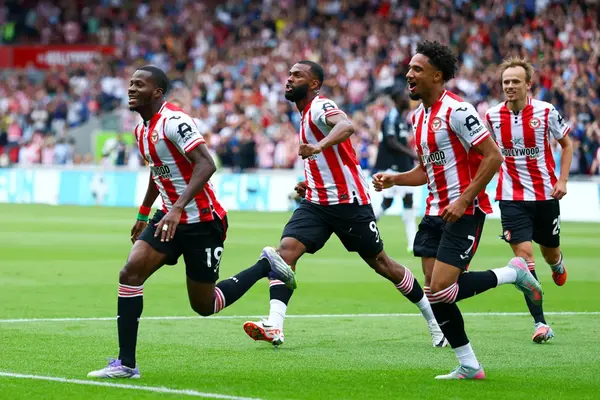
Brentford’s 1–0 win over Aston Villa was a reminder that it’s far too early to be writing Keith Andrews off. Billy “TheBee” Grant reflects on how sweeping headlines after just one poor game miss the bigger picture: a rookie manager still finding his feet, a squad not yet at full strength, and a club often judged more harshly simply because it dares to do things differently
Brentford bounced back in style, beating Aston Villa 1–0 in a performance that was miles better than the lacklustre showing at Nottingham Forest a week earlier. Ouattara’s debut goal sealed the win, but more importantly, the overall display showed organisation, intent, and the kind of spark fans had been desperate to see.
However, in the build-up to the game, some parts of the media leaned heavily on doom and gloom. James Murray’s sensationalist piece “I’ve seen the signs already—Keith Andrews is struggling at Brentford” didn’t exactly pull its punches. Framed as a critique of Andrews, like so many of these so-called analyses it was, in truth, a veiled swipe at Brentford itself.
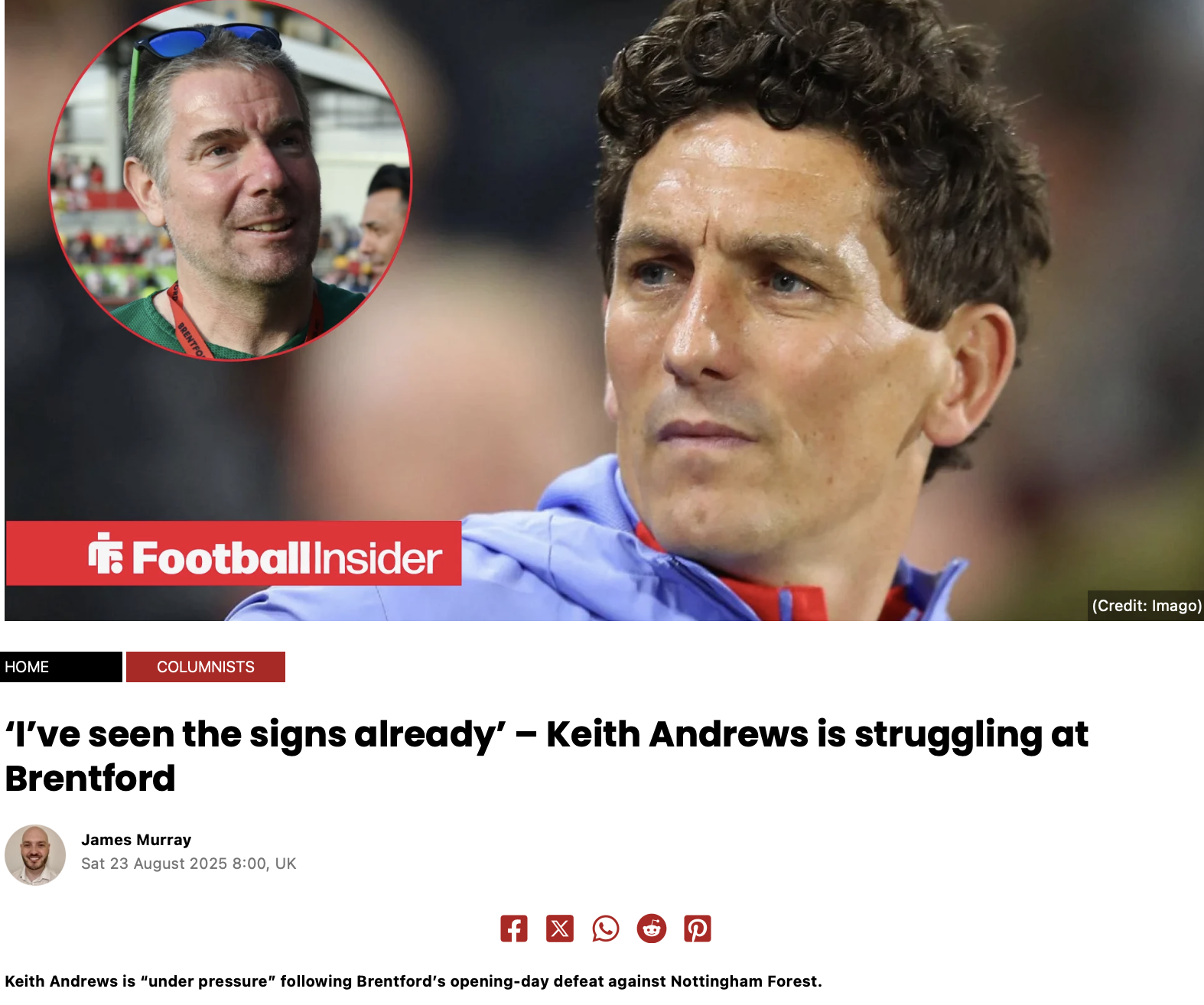
Article: I’ve seen the signs already—Keith Andrews is struggling at Brentford
This isn’t new. Ever since the club went public about using stats in recruitment, sceptics in the media have been quick to dismiss the way Brentford does things differently simply because it doesn’t fit their traditional view of football.
In the Guardian article “Silly party candidates bidding for a majority in football’s boardrooms”, Daniel Taylor places Matthew Benham among England’s most unpredictable club owners. While acknowledging Benham’s intelligence and investment, Taylor frames him as a potential “Silly Party candidate” after parting ways with Mark Warburton who, it became evident later, wasn’t operating on the same page as the club owner and most other people eat the club. “Silly Party” being a tongue-in-cheek nod to his data-driven, unorthodox methods, set against a backdrop of eccentricity, unpredictability, and boardroom chaos across the Football League
Sure, the scoreline at Nottingham Forest was a sobering 3–1, and the performance lacked cohesion, but should that really be enough for some pundits to declare a manager doomed before he’s even got his feet under the table? The team selection that day was very much shaped by circumstance—Andrews had to pick from what was available, and not all of our strongest options were fit or ready, which made things look far worse than they might have been.
Yes, Andrews could have made a few different calls against Forest, but it’s always easy to say that in hindsight. Nobody has all the answers, and it’s not about pretending otherwise. We also understand why fans felt nervous after that game—it was a flat performance, and with a rookie manager in charge, doubts are natural.
But if you step back and look at the bigger picture—factoring in the circumstances—it’s hard to disagree that sweeping conclusions from a single match give a fair or accurate reflection of where Brentford really currently are.
A Closer Look at the Forest Match
The Forest game was always going to be difficult. Beesotted contributors broke it down on the podcast before publishing our full analysis in “Brentford’s Strongest XI vs Nottingham Forest – Reality Check”. That piece highlighted how the side Andrews fielded was a long way off what Brentford’s strongest XI could look like if everyone were fit and available.
That gulf in the quality of the sides that was put out compared to the strongest Brentford XI is crucial for understanding why the performance ended up looking so disjointed.
A Closer Look at the Villa Match
Against Aston Villa, Brentford looked far closer to the side fans had been expecting. The changes we’d discussed on the Beesotted midweek podcast all came into play, and the difference was clear.
Henderson brought control to midfield, Ouattara added energy and capped his debut with a goal, Schade returned with Lewis-Potter shifting back to left-back, and Damsgaard replaced Milambo to give more creativity.
The quality of the lineup—and the balance it gave the team—showed in the performance. Brentford pressed with intent, looked organised, and carried a threat throughout. As The Guardian noted, it was a display full of “spirit, character and resilience,” while The Telegraph highlighted the “clear improvement in pressing and tactical structure” compared to the week before.
Overall Thoughts
There’s no denying it—Andrews is a rookie manager, and with that comes uncertainty. Brentford could have gone down the route of hiring a more experienced name—the finances were there. So it’s perfectly natural for fans to feel nervous. It could go wrong. But leaping straight to “this will fail” after just one poor game feels wildly premature.
And let’s not forget—experience doesn’t guarantee success.
Erik ten Hag arrived at Manchester United with a strong reputation, big expectations, and full backing, yet ultimately couldn’t turn things around and was dismissed.
Ange Postecoglou ended Tottenham’s 17-year trophy drought by winning the Europa League, only to be sacked less than two weeks later after Spurs’ worst-ever Premier League finish. Pedigree doesn’t automatically mean things will work out.
So yes—it could fail. But it could just as easily work. And judging Andrews after two games only gives you a minuscule snippet of the story, not the full picture.
That’s why pieces like James Murray’s—and others cut from the same cloth—come across less as thoughtful analysis and more as pre-written conclusions waiting to happen. Two matches into a season is no time to decide what sort of manager Andrews will be. Give him time, give him his full hand of players, and then we can make fairer judgements.
For now, the Villa win gave us a glimpse of what might be coming. Yes it was work in progress but the team looked more cohesive, the new signings added energy, and there was a sense that lessons had been learned from Forest.
And with Wissa’s future still uncertain and key players yet to be fully integrated, October feels like the point when things will have settled enough to judge Andrews properly.
Until then, as fans we have to be patient, have perspective, and recognise that in reality, two games is nowhere near enough to tell the real story.


