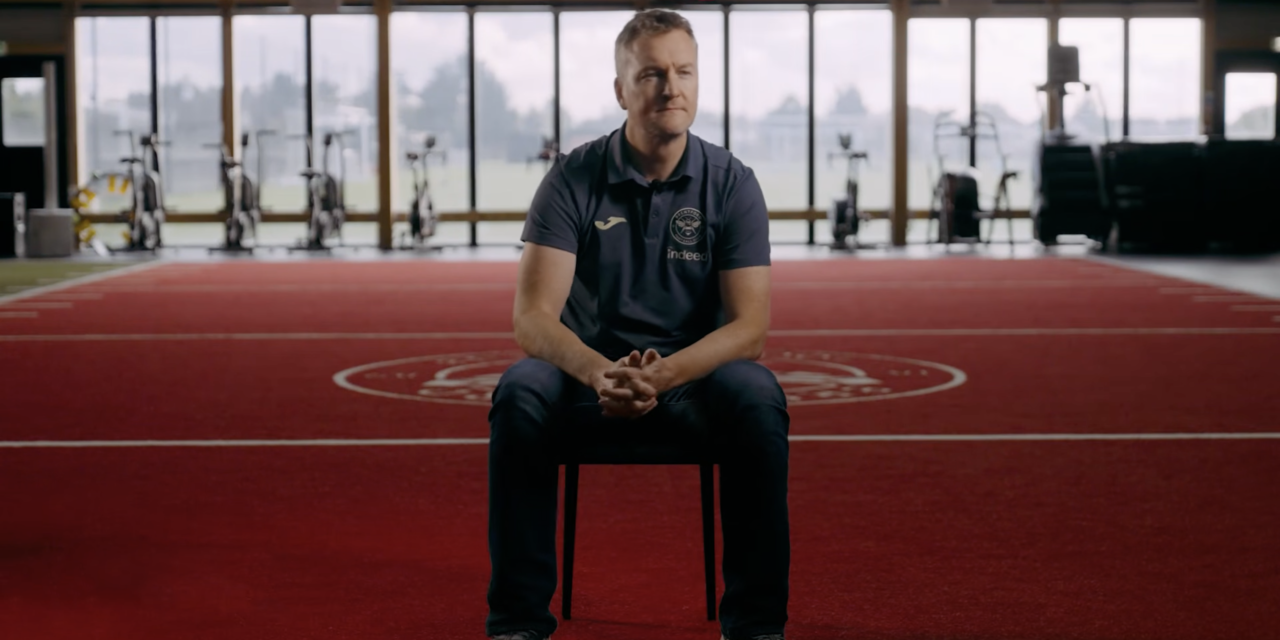
Last summer, Brentford were net sellers – Thomas Frank, Christian Nørgaard, Mark Flekken, Bryan Mbeumo and Yoane Wissa all walked out of the door, and the club banked more than it spent doing it. This summer was always going to be judged against that backdrop, and director of football Phil Giles is in no doubt about what the brief was. “The aim this summer was to more or less keep it together, build on a second season obviously under Keith and his experience of the first year, and then add to the squad where we could with a bit of extra quality,” he explained. On his own assessment, job done.
Five new faces arrived to do exactly that: Jannik Schuster, Callum Wilson, Jaidon Anthony, Mamadou Sangaré and, right at the death, El Hadji Malick Diouf. Giles is careful to frame all five as competitors for a first-team place rather than long-term projects waiting to happen – “there’s always a balance, isn’t there, between players who are maybe ready now or more development projects,” he said, “I think all of them are ready to go more or less from day one, which is great.” That distinction matters more than it might sound. Brentford’s model has traditionally leaned on raw potential bought cheap and sharpened in-house; this window, deliberately, tilted the other way, mixing that approach with players who can contribute immediately. Anthony and Wilson bring senior Premier League miles, Sangaré arrives at just 24 with room still to grow, and Schuster and Diouf, in Giles’ words, “clearly will” develop further as the club shapes them around its system.
The timing mattered as much as the identities. Four of the five were in before the season started, giving Andrews a proper preseason to work with rather than a scramble to bed players in mid-campaign. Giles is adamant that this was about more than fitness. “The players who come back from last year know each other, they know the coaching, they know the style of play, they’ve built relationships on the pitch already,” he said. “It wasn’t starting from scratch with a lot of players – it was dropping in a few players into that group who knew what we’re doing already.” The early results back the theory up: two matches into the season, Brentford have looked sharp and cohesive rather than disjointed, and Giles points to that continuity as the reason why. Freshness for its own sake was also part of the calculation – new faces keep a settled group from going stale and sharpen competition for places, a subtler benefit that’s easy to overlook next to the transfer fees themselves.
The outgoing business tells its own story, and Giles is clear that getting it right mattered for the individuals as much as the balance sheet. Jordan Henderson’s departure was, by his account, entirely on the terms set out when he arrived – “we always said to him, you come here, you play, you’ll be a part of it… at a point where you want to go, no problem, that’s absolutely fine.” Ethan Pinnock’s exit sits at the other end of the spectrum entirely: a long-serving player owed the kind of respectful send-off that comes from years of service rather than a season’s worth. Both moves, in Giles’ telling, were “relatively easy deals to do in the end,” which is as much a compliment to how the club manages relationships as it is to the transfer business itself.
Brentford’s academy status – Category One, competing in Premier League 2 and now the EFL Trophy – shapes the loan strategy more than people might assume, though Giles plays down any dramatic shift. Younger forwards like Kaye Furo will get first-team-adjacent minutes through EFL Trophy football, while a clutch of academy graduates, Benjamin Arthur among them, head back out on loan to build on breakthrough spells elsewhere, mostly at Championship level. One deal broke from that pattern entirely: Darwin Guagua was signed and immediately loaned onward to Mérida in Spain’s third tier, a structure Giles says the club hadn’t used before and one that lets a promising young player keep developing abroad rather than sitting in a Brentford shirt he isn’t ready to wear.
Zoom out to the wider market, and Giles admits his own pre-summer prediction was wrong. He’d expected a quieter window after 2025’s spending spree; instead the Premier League kept throwing money around regardless. Brentford spent more than usual by their own standards, but the context still favours the recruitment department. “When you compare us paying 30-something million to 70 or 80 or 120 million elsewhere, we’re obviously not in that ballpark,” Giles said, crediting the scouting and recruitment staff for finding value without chasing the numbers everyone else is chasing.
As for what it’s all building towards, Giles reaches for the same logic that got Brentford out of the Championship in the first place: keep improving, and the results tend to follow on their own. Four straight top-half Premier League finishes are the platform; European qualification is the distant but not unreasonable destination if that trend holds. Nobody at Brentford is pretending to know how the rest of the division’s own spending will play out. The plan, as ever, is simply to keep being themselves, and to keep climbing.
Listen to Giles talk it through and there’s no bluster in it, just a director of football quietly confident he’s built something sturdy. But strip away the caution and read between the lines of that squad list – Sangaré, Diouf, Wilson, Anthony, Schuster added to a group that already knew exactly what it was doing – and as Brentford fans we can clearly see that we are now well equipped to achieve something truly special this season. Come On You Bees!
Dave Lane